by Jonathan Tomlinson
Share
Share
The study trip to Greece offered our group from the University of Montreal a rare immersion into the landscapes and ancient sites that shaped the thought and aesthetics of the ancient world. From Athens to the Peloponnese, the architecture and art history students observed, explored, and above all sketched with remarkable sensitivity. Their sketchbooks reveal an attentive, curious, and deeply human gaze. This blog brings their creations together, celebrating both their talent and the timeless beauty of the places that inspired them.
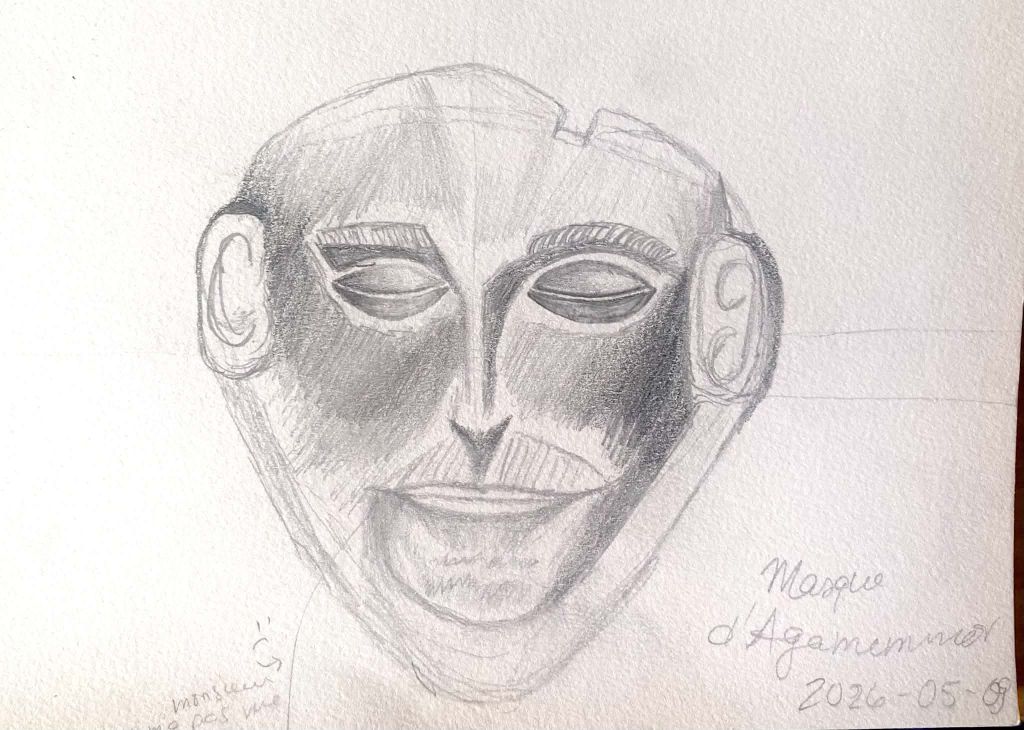
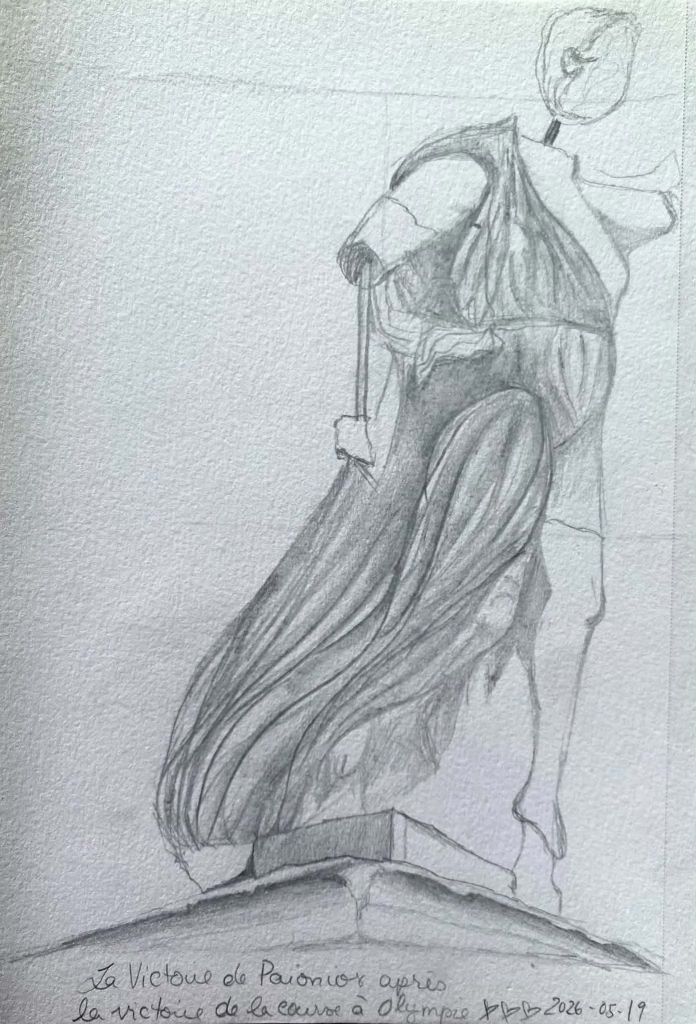
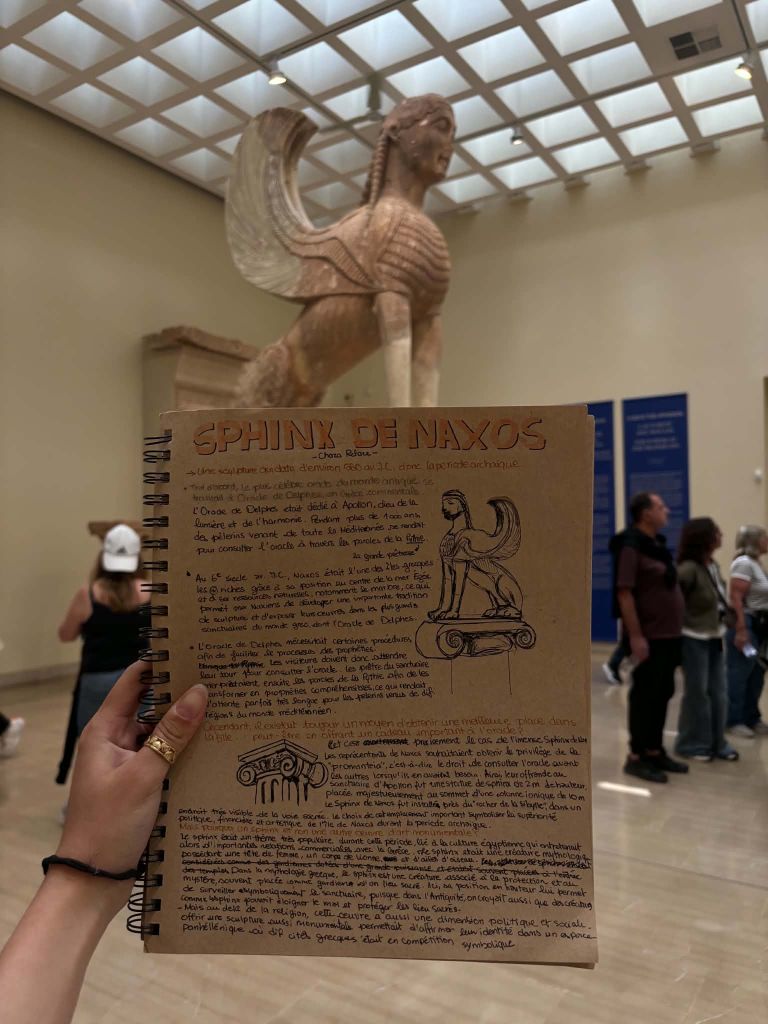
“Hello! My name is Clara, and I’m about to begin my final year of the bachelor’s degree in art history.”
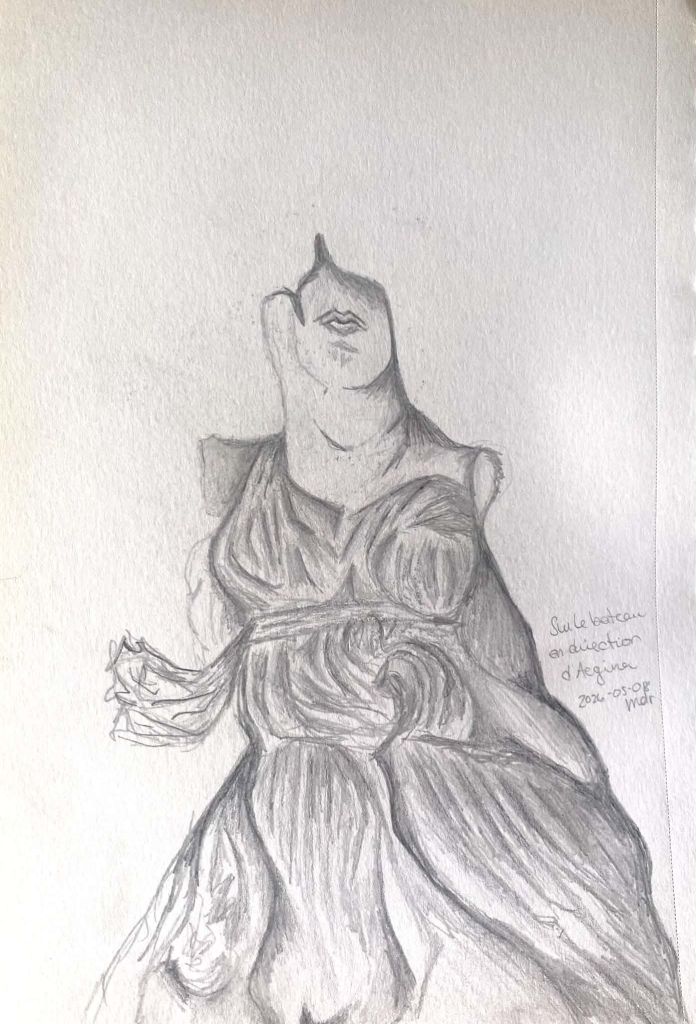
“Last winter, I took the course ART1800: Techniques and Pictorial Processes, where I discovered an interest in drawing and watercolor. With my novice pencil stroke, I challenged myself to continue learning while traveling by painting and sketching the Greek artworks that resonated with me the most. The architecture students were an invaluable help in sharpening my eye and pushing me beyond my perfectionist worries. Thanks to them I’m now continuing to fill my sketchbook in the great Parisian museums.” [Clara Jacquoudet student in the Bachelor’s program in Art History at the University de Montréal.]
“My name is Chaza Rafaee, and I’ve just completed my first year of the bachelor’s degree in architecture at the University of Montreal.”
“This trip to Greece was a particularly meaningful experience for me. Seeing in person what we had studied in class — including the history of Greek architecture, temples, castles, sanctuaries, architectural styles, textures, materials, and the construction methods used at the time — was truly fascinating. I also greatly enjoyed learning about the history and context specific to each site. The way each place tells a part of the story of architecture allowed me not only to deepen my architectural knowledge, but also to find genuine inspiration for my future projects.”
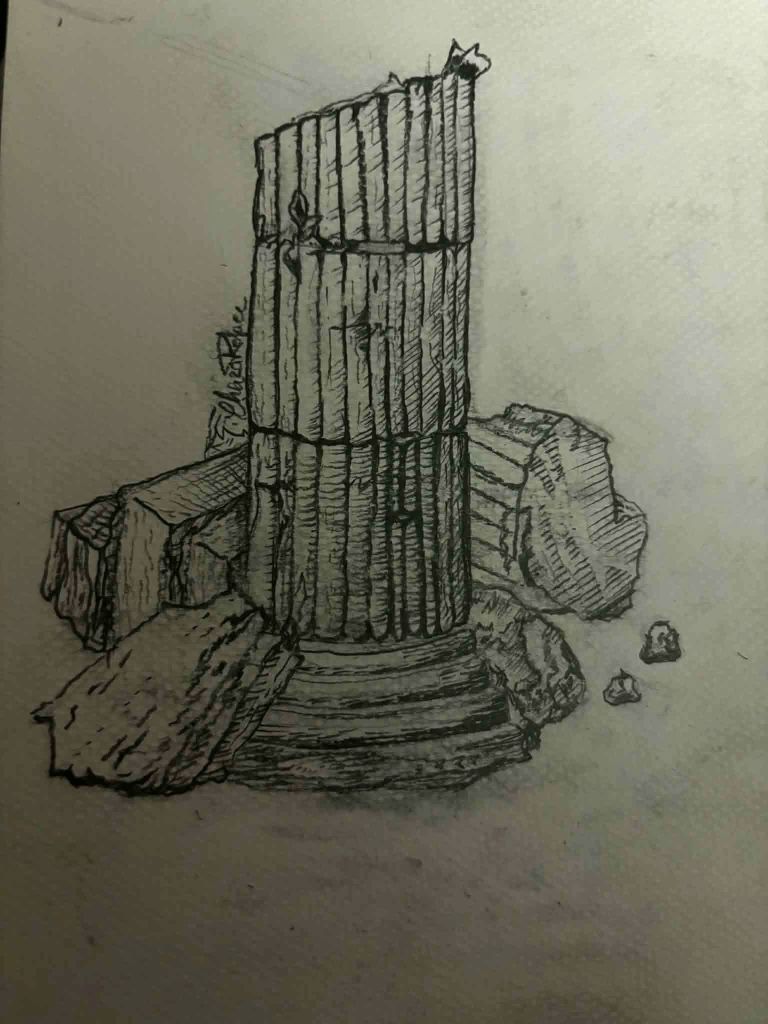
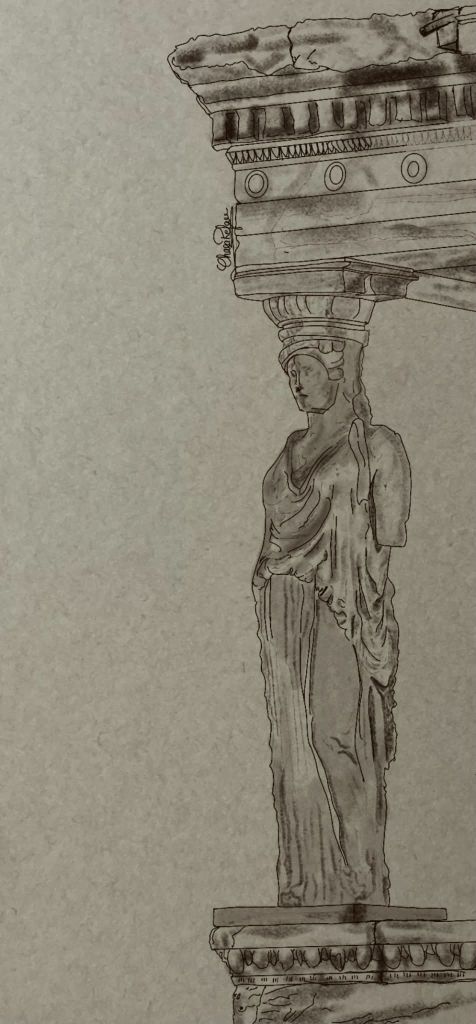
“During this trip, sketching was very important to me. Drawing allowed me to capture architectural details while observing the sites in a different way, taking the time to notice elements that can sometimes be overlooked during a simple visit. For me, these sketches are both memories of this wonderful journey and a way to better understand architecture, its history, and the traces it leaves through time.” [Chaza Rafaee student in the Bachelor’s program in Architecture at the University de Montréal.]
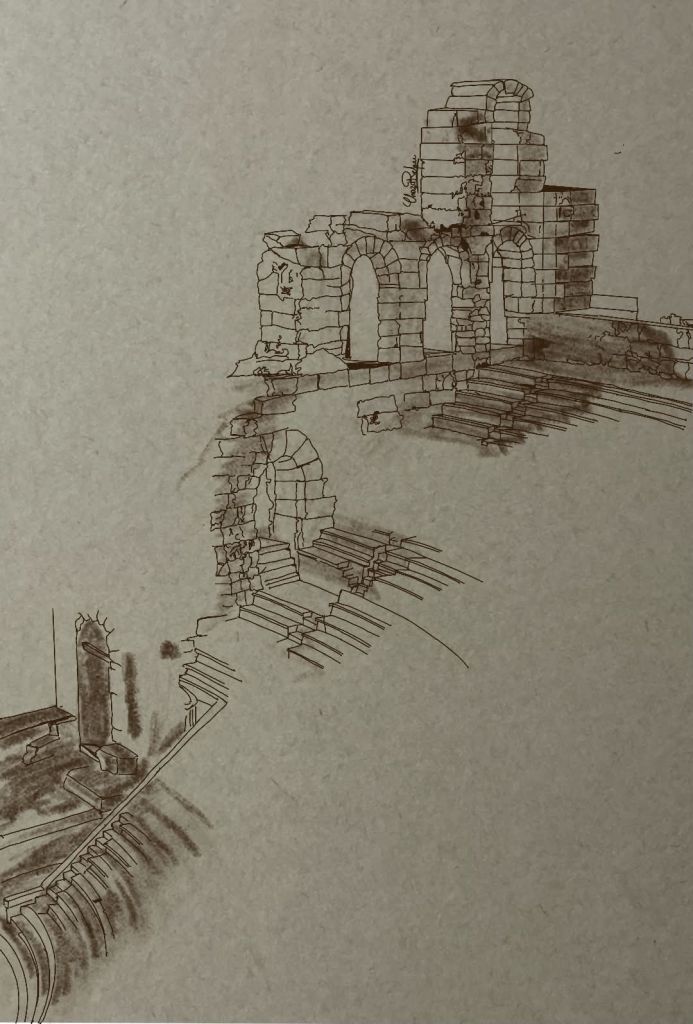
“Classical compositions suggest regular arrangements, recognizable proportions, bilateral symmetry, strong frontal viewpoints, in short, a certain rigidity in geometric composition. These assumptions might be influenced by canonical Neoclassical figures such as the Washington Capitol and the urban layout surrounding the National Mall up to the Lincoln Memorial, or, on another scale, the articulation of Palladian villas.”
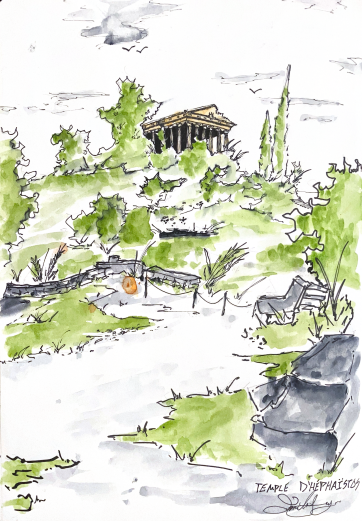
“So, when visiting Greek secular and sacred sites, I expected to find strict orthogonal systems, measurement grids, standardized modules, and little room for accident. After all, ancient Greece remains renowned for its development of the arts, sciences, mathematics, geometry, and the pursuit of precise measure. This is, after all, what the term “classical” suggests: a balanced set of qualities, characteristic of an essential reference serving as a model.”
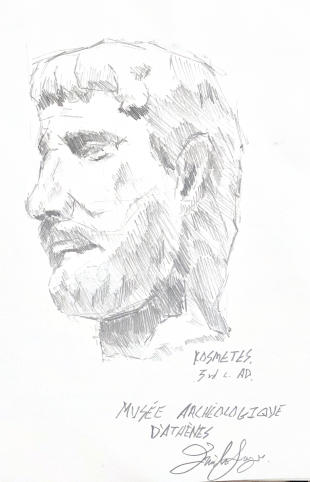
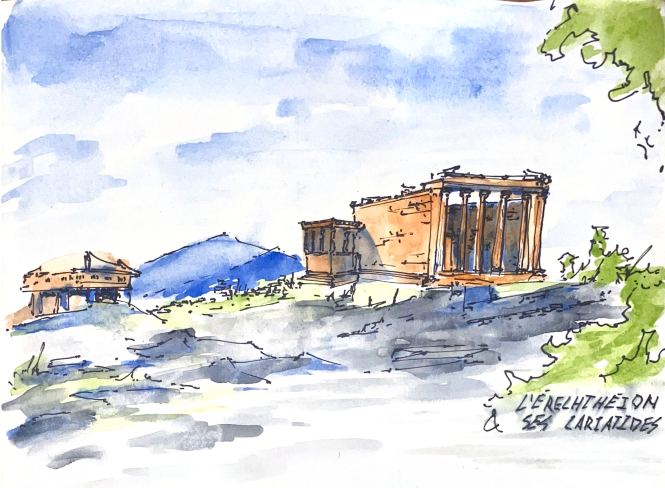
“Yet, although I did observe a fundamentally ubiquitous, rich, and sophisticated visual and formal language, the planning of the sites seemed rather arbitrary: building offsets, pauses and detours along pathways, shifts in angles and planes multiplied; the layout took on characteristics akin to organic, spontaneous, and above all picturesque development.”
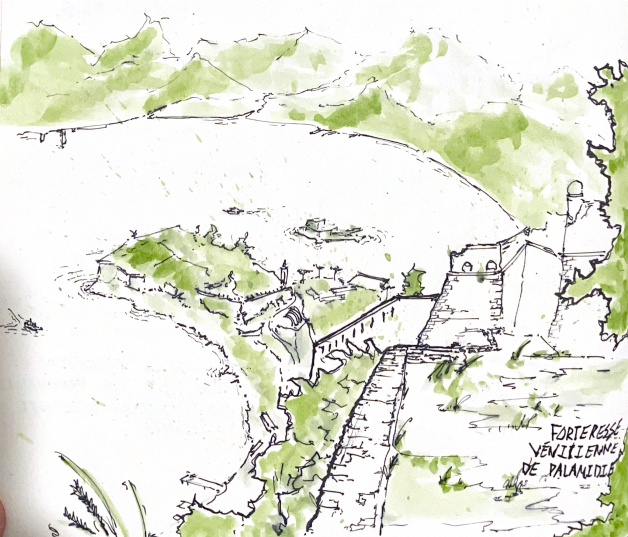
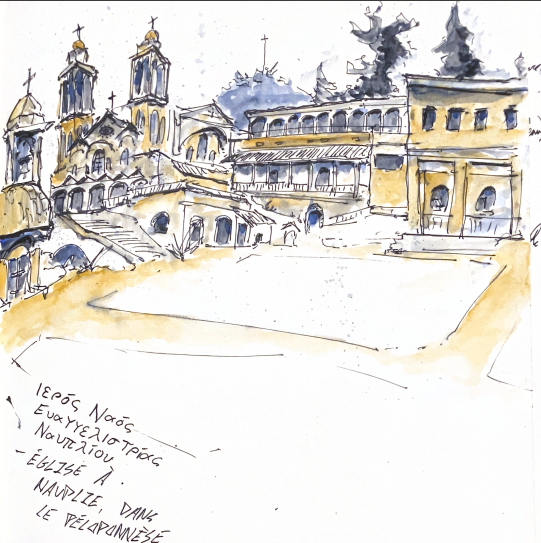
“In the first year of architecture school, we are encouraged to analyze space through sketching. Armed with my notebook and pencils, I tried to understand the site layout, the relationship between buildings, and the general formal expression of the places. Through pacing measurements, walking, and long meditative moments, I sought to grasp the spirit of the site and reflect on the underlying compositional rules governing the deployment of its systems: this is the nature of more technical case studies. Other times, paralyzed by the sublime or simply bored while waiting ten minutes for the bus, I would pull out my notebook and pen to compose a quick sketch.”
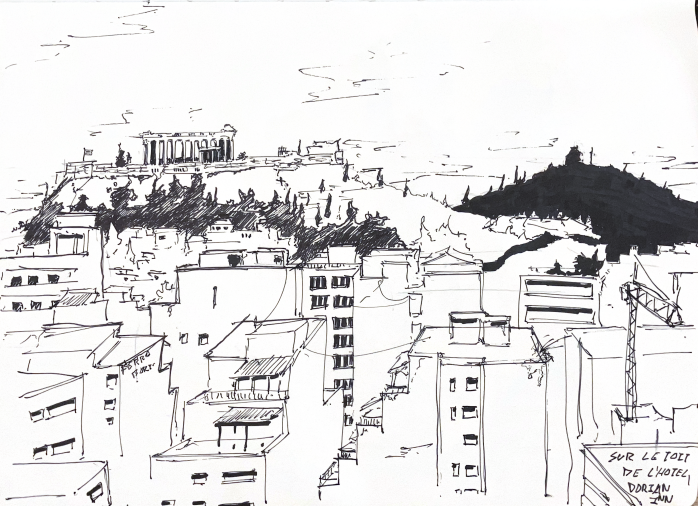
“Today, photography is more accessible than ever, and that is a fantastic opportunity. So what place does sketching still hold? Its value lies in the longer pause it encourages. It requires a certain concentration and a sharper observation of the details and the Nature of each thing; the learning ultimately becomes deeply integrated.”
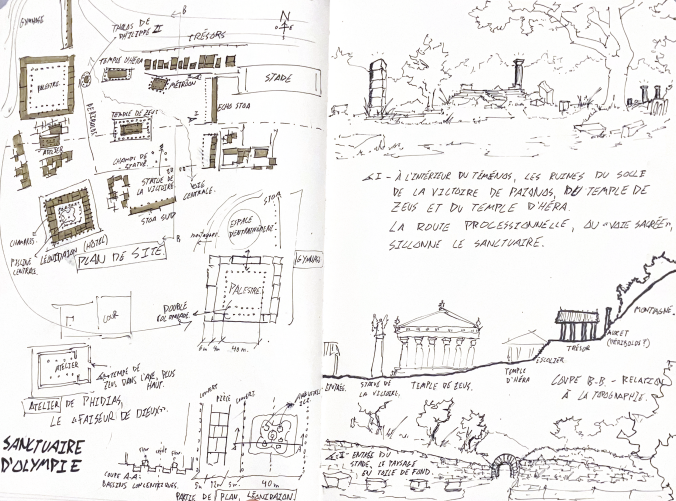
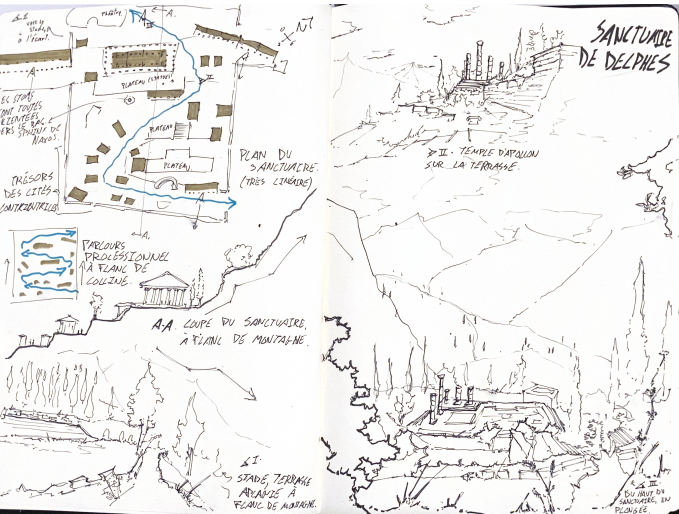
“Two months later, as I write this text, my sketches bring me back to precise moments of the trip, to vivid memories in my mind: sometimes to unique architectonic logics, sometimes simply to happy moments shared with a group of wonderful student travelers and teachers.” [Émile Goyer student in the Bachelor’s program in Architecture at the University de Montréal.]
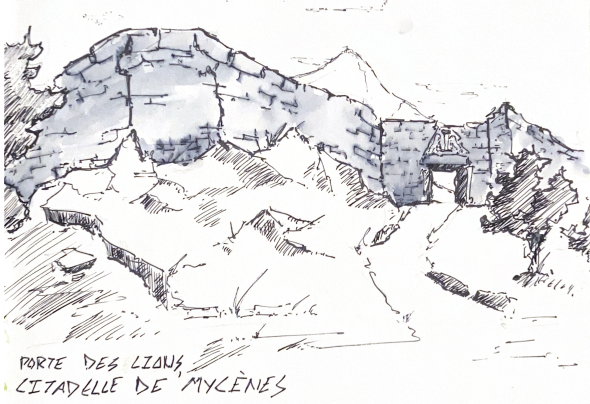
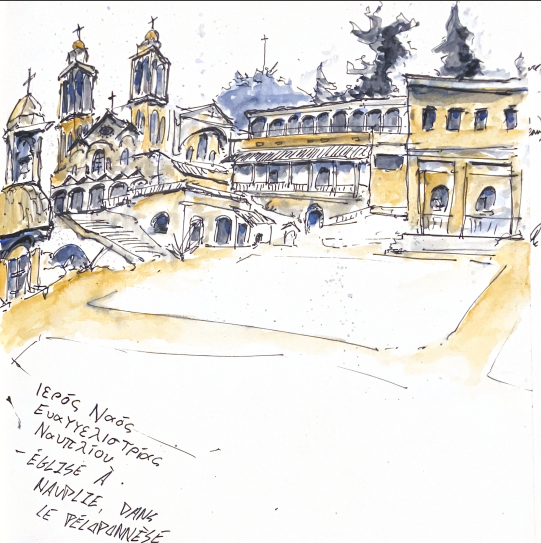
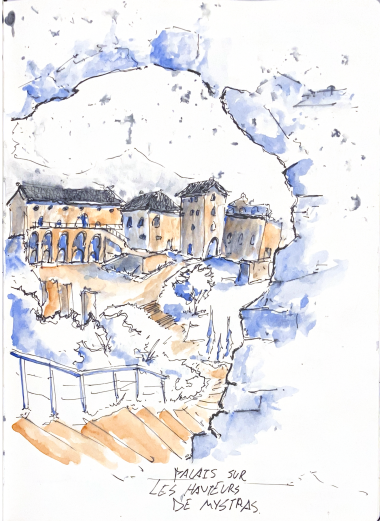
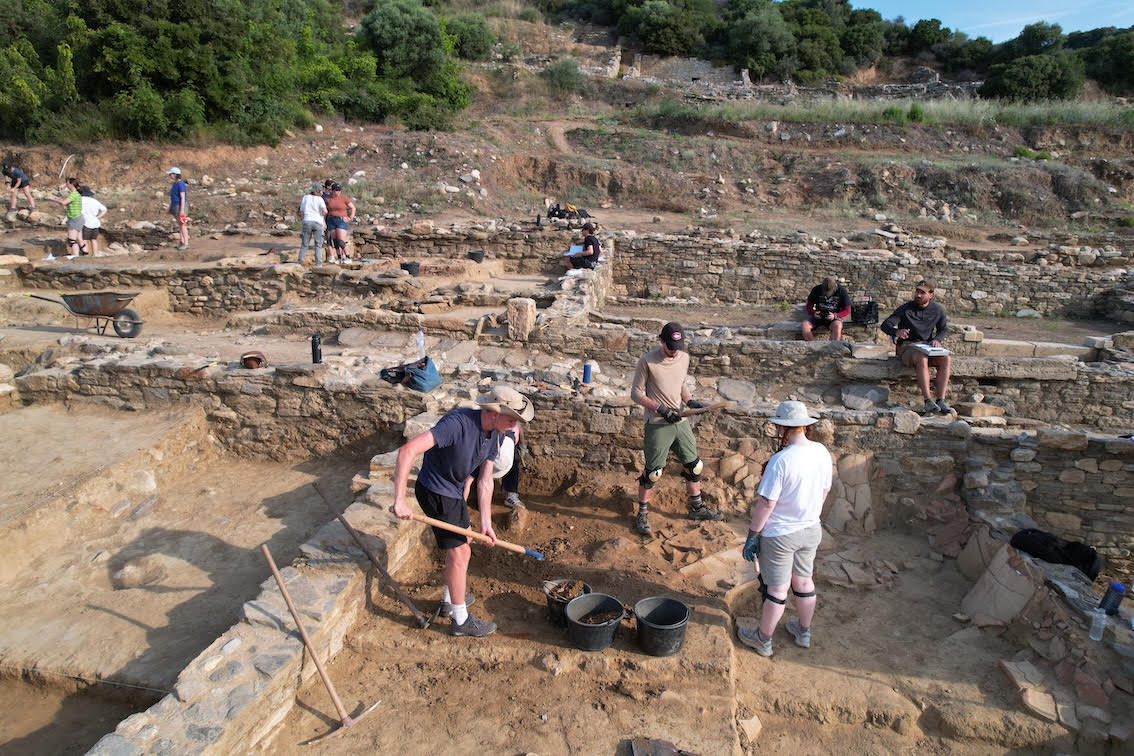
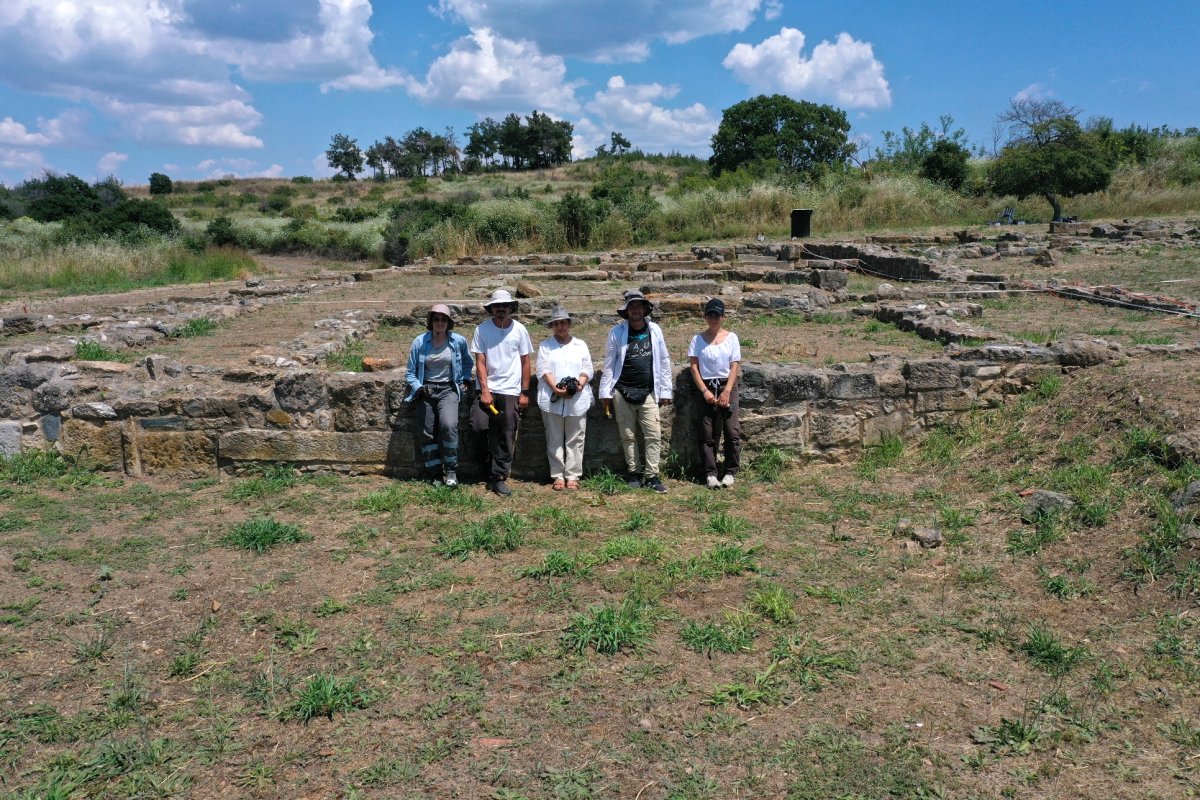
Back at it again! This year, over 80 university and CEGEP students and staff came together for another incredible season at Ancient Argilos in Northern Greece. The 2026 excavation, co-directed by Dr. Zisis Bonias and Dr. Jacques Perreault,
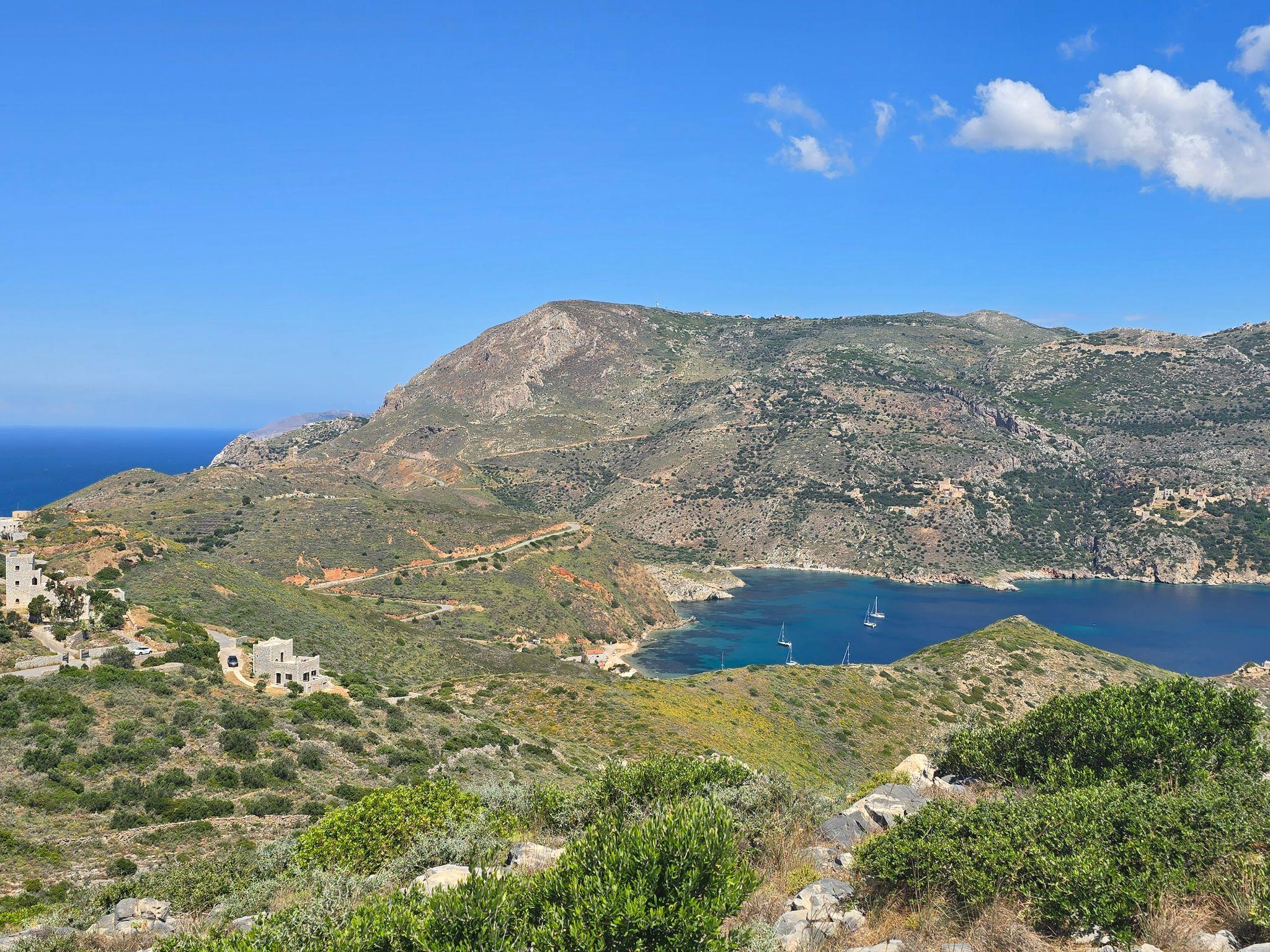
In May-June 2026, under the auspices of the Ephorate of Antiquities of Lakonia, with a permit through the Canadian Institute in Greece, the Southern Mani Archaeological Project (SMAP), directed by Drs. Chelsea Gardner (Acadia University) and William Parkinson