
CIG’s year-round staff in Athens include the Director, Assistant Director and Cultural Program Manager. They are assisted during the academic year (September to May) by a Fellow and Interns appointed annually, and by a summer Intern from May through July.

After completing his B.A. and M.A. in Classical archaeology at Université Laval (Quebec), Jacques Perreault undertook his doctoral studies at the École Pratique des Hautes Études en Sciences Sociales in Paris. He obtained his Ph.D. in archaeology in 1984 and that same year was admitted as the first Canadian member of the French School of Archaeology in Athens. In 1987 he was appointed Director of the Canadian Archaeological Institute in Athens. Returning to Quebec in 1992, he taught one year at Concordia University before being hired at the Université de Montréal in 1993 as Director of its Center for Classical Studies, a position he held until 2003. Since 2014 he has been Chair of the Université de Montréal’s History Department.
Jacques Perreault has taken part in several archaeological excavations in France, Tunisia, Syria and Greece. He is currently co-director of the Greek-Canadian Excavations at Ancient Argilos.
He has contributed to numerous publications. His main interests concern contacts between Greeks and non-Greeks, trade in the ancient Mediterranean, Greek colonization and urbanism, and various aspects of Greek productions, especially pottery. Jacques Perreault was appointed an honorary member of the Greek Archaeological Society in 1987 and named honorary citizen of the City of Amphipolis in 2010.
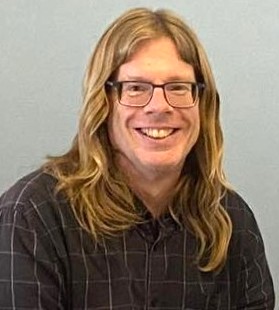
Jonathan Tomlinson received an honours degree in Chemistry (1988) and a PhD in archaeological science (1991), both from the University of Manchester. His research examines trade in the Late Bronze Age Eastern Mediterranean through the provenancing of pottery by chemical analysis. Jonathan first came to Greece in 1990 as a student at the British School at Athens, and returned in 1991 to work on the publication of results from his thesis. Several international scholarships allowed him to continue and expand his research and to conduct fieldwork at Knossos, Palaikastro and Kato Phana. He has continued to live in Greece since then, and became CIG’s Assistant Director in 1999.
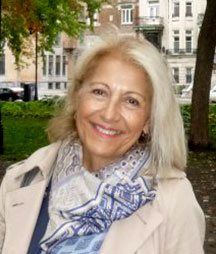
Zoe Delibasis completed a BA in Sociology and Social Anthropology at McGill University in Montreal. She moved to Greece in 1979, having been selected for the position of Immigration Officer at the Canadian Embassy in Athens. In 1994, Zoe was designated Political and Public Affairs Officer at the Canadian Embassy in Athens, also responsible for cultural and media relations, a position she held until her retirement from the Canadian Public Service in 2020.
Zoe’s professional experience includes the organization of cultural events in the performing, visual and literary arts as well as cinema, including Canadian participation at the Thessaloniki International and Documentary Film festivals, the Athens Festival and the Thessaloniki Book Fair. She has led media promotion campaigns of Canadian embassy events and initiatives, including the North America tour of the exhibit “The Greeks: From Agamemnon to Alexander the Great”. She developed the annual Canadian Artist’s Residency program at the Vorres Museum in Athens, Greece. She has initiated bilateral collaboration between Canadian and Greek academic institutions for the establishment of partnerships in research and education.
Zoe has attended conferences and workshops in Canada and Europe on media relations, as well as on arts management and promotion. She has participated in international cultural events, including the CINARS Biennale and Le Salon du livre in Montreal, as well as the International Film Festivals of Montreal and Toronto.
She speaks, English, French, Greek and Italian.


Eric Del Fabbro is a PhD candidate in the Department of Greek and Roman Studies at McMaster University. He is a writing a thesis entitled “Settlement dynamics in the ancient chora of Metaponto: An archaeological investigation into the social, political, and economic history of the countryside.” under the supervision of Dr. Spencer Pope.
The countryside around the ancient polis of Metaponto in southern Italy has been the subject of an intensive field survey aimed at understanding patterns of rural settlement from prehistory to the early modern period. Eric’s project uses the ceramic artifacts collected from the survey to identify the chronology and function of the rural sites. The countryside was occupied by a dense network of farmsteads, necropoleis, and sanctuaries from the Archaic to Hellenistic period. His research seeks to understand how changes in rural settlement over time were connected to broader political and social developments that affected the whole polis. It also investigates questions related to the production and exchange of pottery in the chora.
Thanks to the Neda and Franz Leipen Fellowship, Eric hopes to complete the writing of his dissertation and do supplementary research on Greek Hellenistic pottery. During his nine-month stay in Greece, he will not only have access to a wide array of publications at the Canadian Institute in Greece and other foreign institutes, but he will also be able to study ceramic artifacts in the storerooms of the Athenian Agora and other major collections.
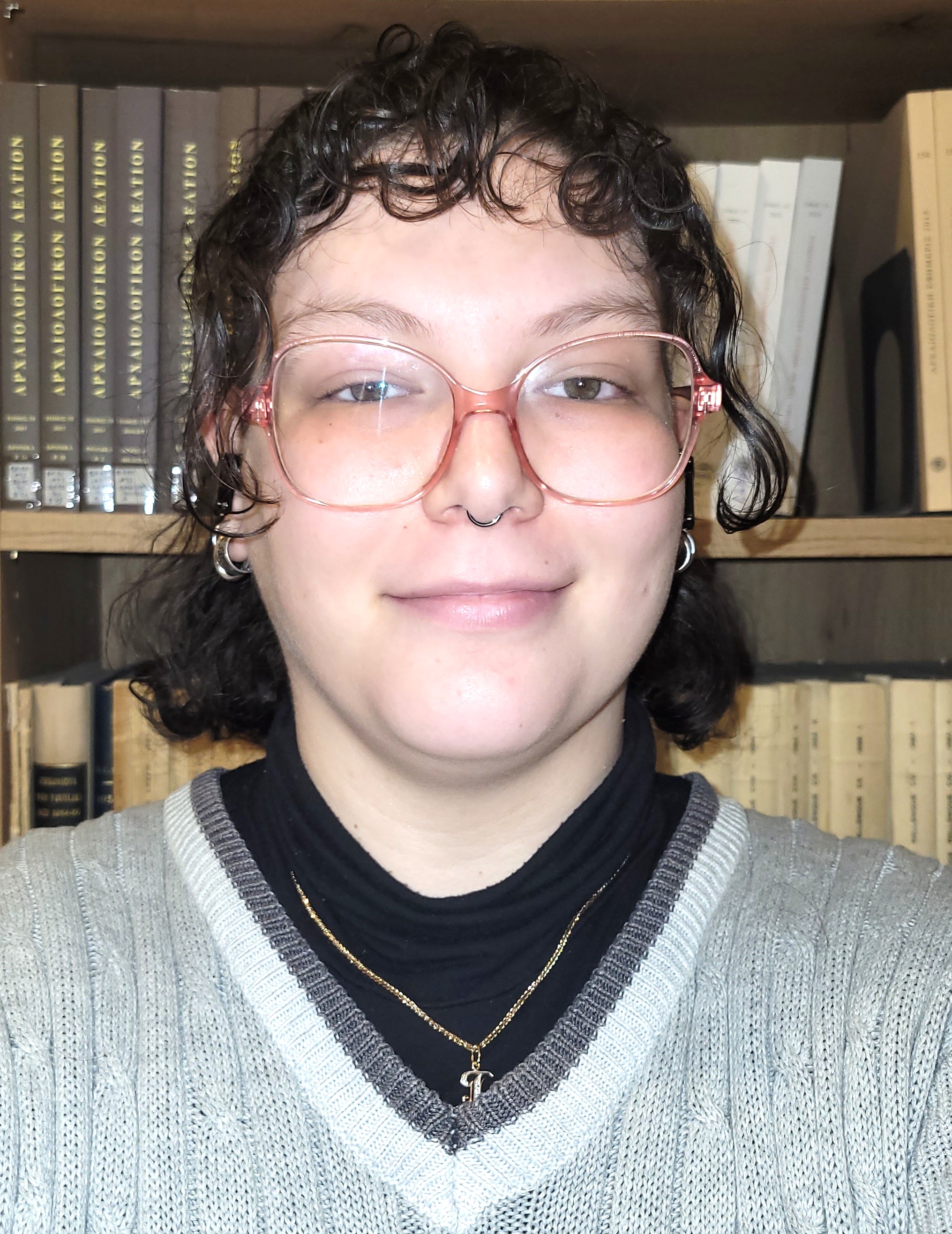
Tammy Markov is currently studying for her BA in Honours Classical Studies at the University of Waterloo in Waterloo, Ontario. Tammy has an interest in the Hellenization of the ancient world especially during the Hellenistic period and in exploring interdisciplinary approaches to archeology.
Tammy participated in our 2025 Peloponnese Summer School and is looking forward to further immersing herself in Greek culture for a deeper understanding of both the contemporary and ancient Greek world. In this way, during her internship, Tammy hopes to continue to support the connection between Greek and Canadian researchers and institutions.
