by Jonathan Tomlinson
Share
Share
The biggest news from Hollywood this summer has been about the newest blockbuster film from Christopher Nolan, The Odyssey. In addition to its huge success and popularity, discussion focuses on the historical accuracy of various elements of the movie, sometimes with informed insight and other times with only strong opinion. Often, these discussions fail to recognize that the ‘history’ of Homer’s epic poems is a highly fraught question that scholars, philologists and archaeologists, have been struggling with since antiquity and something that can never be satisfactorily answered because the poems we associate with Homer are creative, evolving works of fiction that are adapted to their audiences. The film and the discussions it has generated provide an opportunity for our archaeological project at ancient Eleon to highlight some of the material connections with have excavated with the ‘worlds’ of Homer.
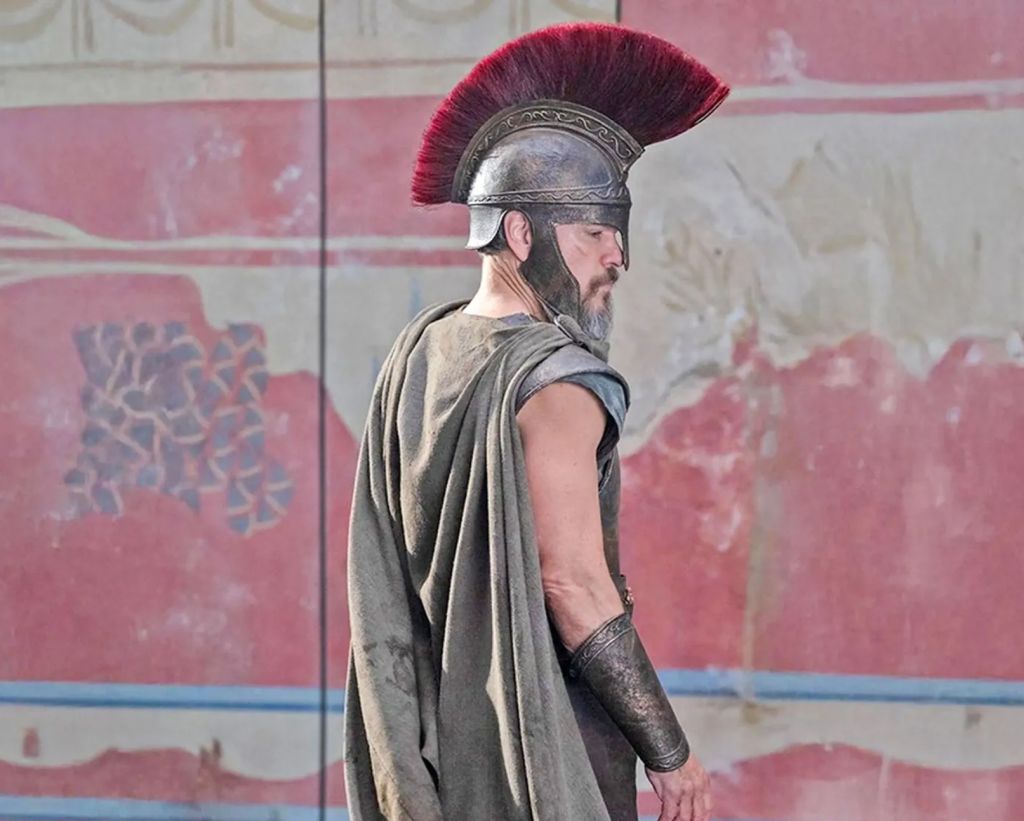
Publicity photo for Christopher Nolan’s Odyssey (2026)
Ancient Eleon, located in central Greece about 14 km east of Thebes, has been under study by members from the Canadian Institute since 2007 when a regional survey was conducted. The Eastern Boeotia Archaeological Project (EBAP), as we are called, started excavations in 2011 as a synergasia (collaboration) of the Ephorate of Antiquities of Boeotia and the CIG and is currently directed by Dr. Alexandra Charami of the Ephorate and Brendan Burke (University of Victoria), Bryan Burns (Wellesley College) and Trevor Van Damme (University of Warwick). In 2026, the team returned to the elevated limestone ridge on the western edge of the village of Arma, about 14 km east of Thebes, for six weeks of excavations and we found further connections between Eleon and ‘Homer’s world’.
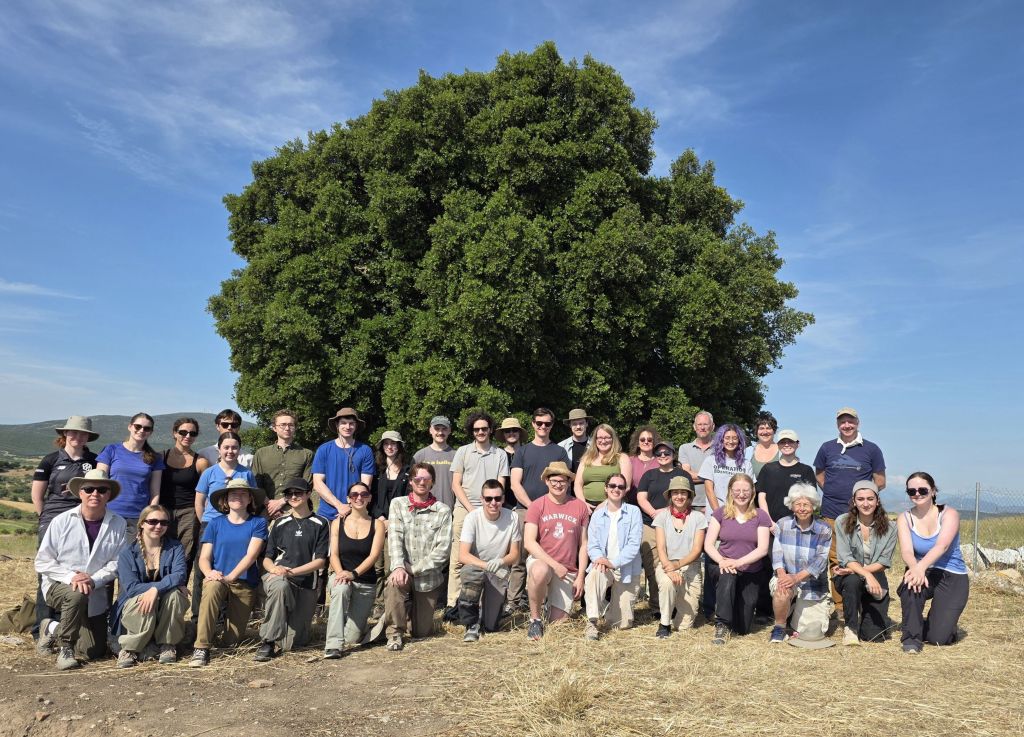
EBAP/Eleon excavation team 2026
Although far from the Troad, the site of ancient Eleon in Boeotia is connected to Troy through two passages in the Iliad that name the site. The first is Eleon’s inclusion in the Catalogue of Ships (appearing in Book 2.500) as one of cities among the Boeotian contingent the leads the Greek forces to Troy at the start of the war. The second passage (10.266–267) offers more specific heroic connections between Eleon and the Homeric heroes, specifically, Odysseus: The boar’s tusk helmet worn by Odysseus is given an elaborate genealogy that connects three generations through a series of exchanges back to Odysseus’ own grandfather, Autolykos, who visited Eleon. At Eleon, Autolykos stole the helmet from the well-built house of Amyntor, the son of Ormenos. This line of Odysseus’ family was also featured in a lost play of Euripides, the Phoenix, with action unfolding in front of the palace of Amyntor at Eleon, according to some commentators. That follows the third mention of Eleon in the Iliad, when Phoenix recounts the dispute with his father, which led him to run away and eventually become part of Achilles’s contingent. He describes the strongly-built courtyard house of Amyntor and the wealth of the family as relatives tried to smooth tensions through feasting:
They singed the hides of many pigs and stretched
the carcasses, that shone with fat, across
the fire for cooking, sacred to Hephaestus.
They drank enormous quantities of wine
from huge wine-jars belonging to my father.
Iliad 9.466-69, Emily Wilson, translator
With this background, we can ask, what are the archaeological indicators that might connect the literary imagination of Homer with the material world we were excavating at ancient Eleon? The site of ancient Eleon has three major periods of Bronze Age activity: pre-Palatial (ca. 17th-16th c. BCE), connected to the elaborate burials complex we call the Blue Stone Structure; the Palatial period (15th to 13th c BCE), the age contemporary with the elaborate administrative complexes at Mycenae, Pylos and Tiryns and the age of Linear B records (12th c BCE); and the post-Palatial period, referred in ceramic terms as the LH IIIC period, (12th-11th c BCE). The post-Palatial period was relatively short, and a period of resilience in aftermath of wide-spread destructions of major palace centers. At Eleon, it’s the levels dating to the LH IIIC early and middle that provide evidence for the endurance of Mycenaean culture at secondary centers. Elements of all these ages are preserved in the epic poems of Homer.
Excavations in the Northwest quadrant of Eleon have uncovered a multi-room complex dating to the LH IIIC periods (early and middle). The northern section is divided into two large rooms, each of which features a centrally positioned hearth. In the central room we have four post supports surrounding the hearth, in form comparable to, though much simpler than, a Mycenaean palatial megaron. This complex in the Northwest and comparable structures in the further southwest were roofed with large clay tiles, flat pan tiles, covered with half-cylindrical cover tiles. The fired clay roof tiles demonstrate that these were buildings of some significance, requiring a great deal of organized labor for their construction. The buildings likely had a public function, rather than a domestic one. We might even imagine stories of Troy being retold here around the multiple hearths.
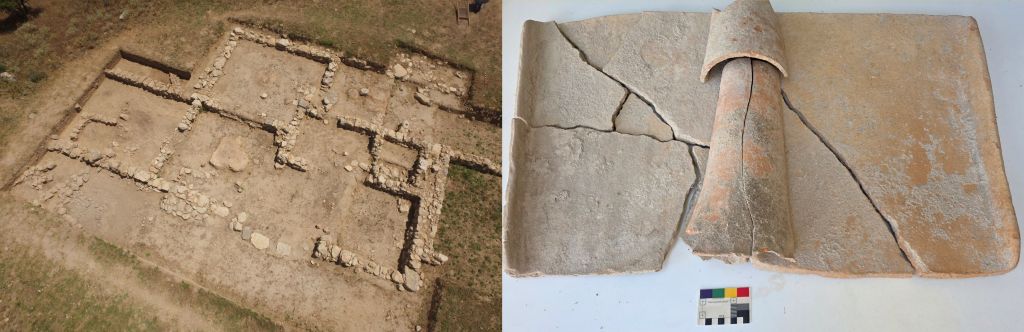
NW quadrant Eleon 2019 and roof tile fragments from the SW 2026
In the Southwest quadrant of ancient Eleon, we have architecture at a different orientation than the Northwest and finds which suggest religious activity. Here people may have made offerings of prized possessions, perhaps in gratitude for success in war or hunting. One find in particular suggests this and it is a section of a boar’s tooth with small drill holes in three locations. Two of the drill holes are through raised portions of the tooth, which were likely intended to hold the tusk fragment, fixing it onto a helmet, like the one described by Homer in book 10 of the Iliad. We have a second fragment of a boar’s tusk from nearby as well. While two tusks do not make a whole helmet (it is estimated that thirty boars would be needed for one complete helmet) the fragments we have are evocative.
We thus have tantalizing indications of Homer’s world: large, tile roofed public structures with hearths inside for banquets and story telling and boars tusks likely from a hero’s helmet.
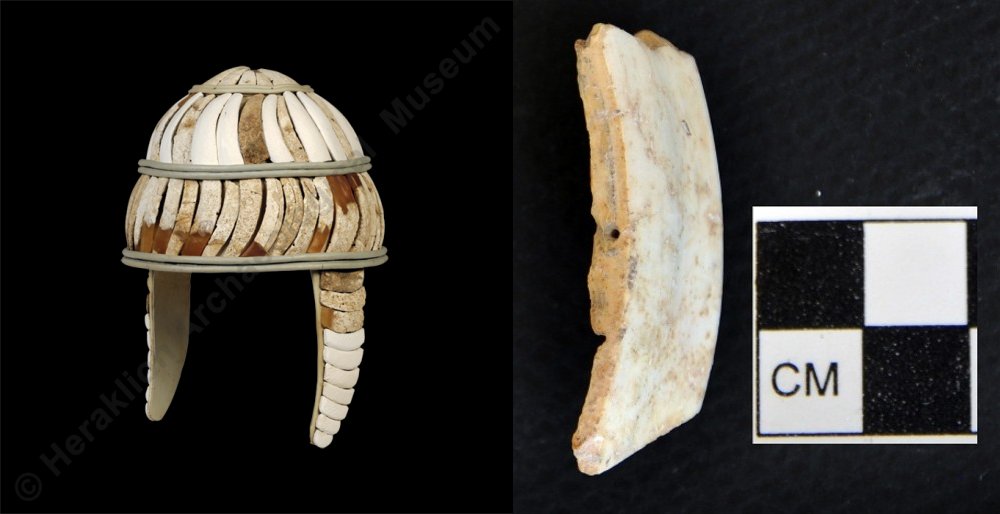
Boar’s tusk helmet from Zafer Papoura Knossos (Heraklion Museum) and boar’s tusk from Eleon showing drill holes
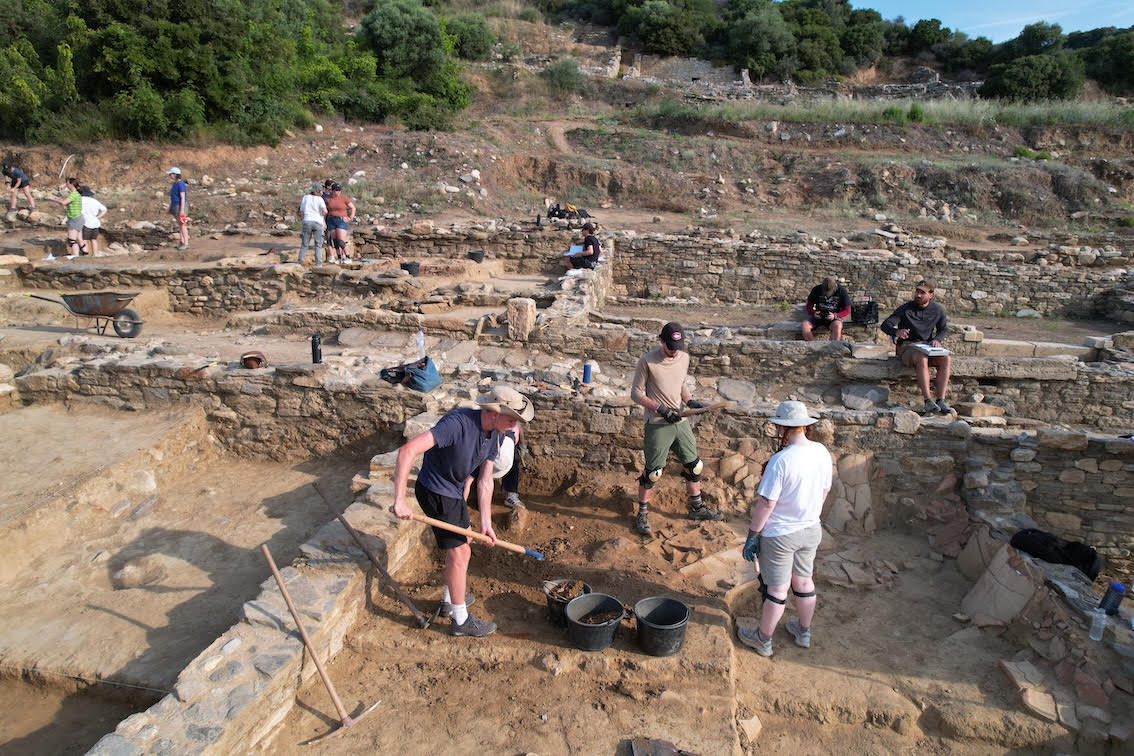
De retour sur le terrain! Cette année, plus de 80 étudiants et étudiantes universitaires et collégiaux, ainsi que des membres de notre équipe, se sont réunis pour une nouvelle saison exceptionnelle à Argilos, dans le nord de la
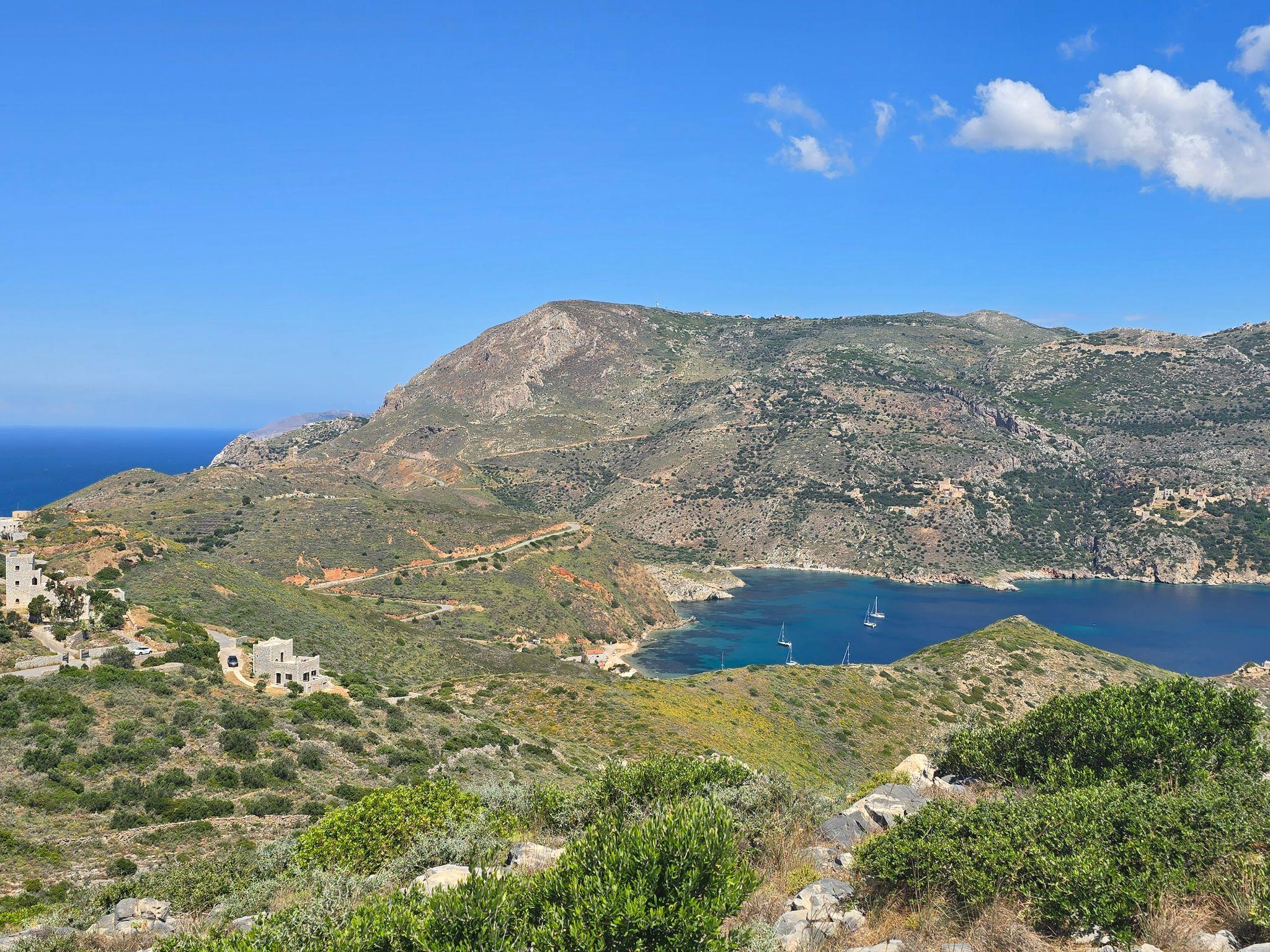
In May-June 2026, under the auspices of the Ephorate of Antiquities of Lakonia, with a permit through the Canadian Institute in Greece, the Southern Mani Archaeological Project (SMAP), directed by Drs. Chelsea Gardner (Acadia University) and William Parkinson