by Jonathan Tomlinson
Share
Share
And with that, the second half of the CIG’s Cycladic Island and Crete Summer School is complete!
These three weeks flew by, with students craving more adventure and knowledge as we explored museums, archaeological sites, and the breathtaking landscapes of these incredible islands!
With Athens and Paros already visited, the students disembarked in Santorini with wonder in their eyes, eager to see what this island—and even more so, majestic Crete—had in store.

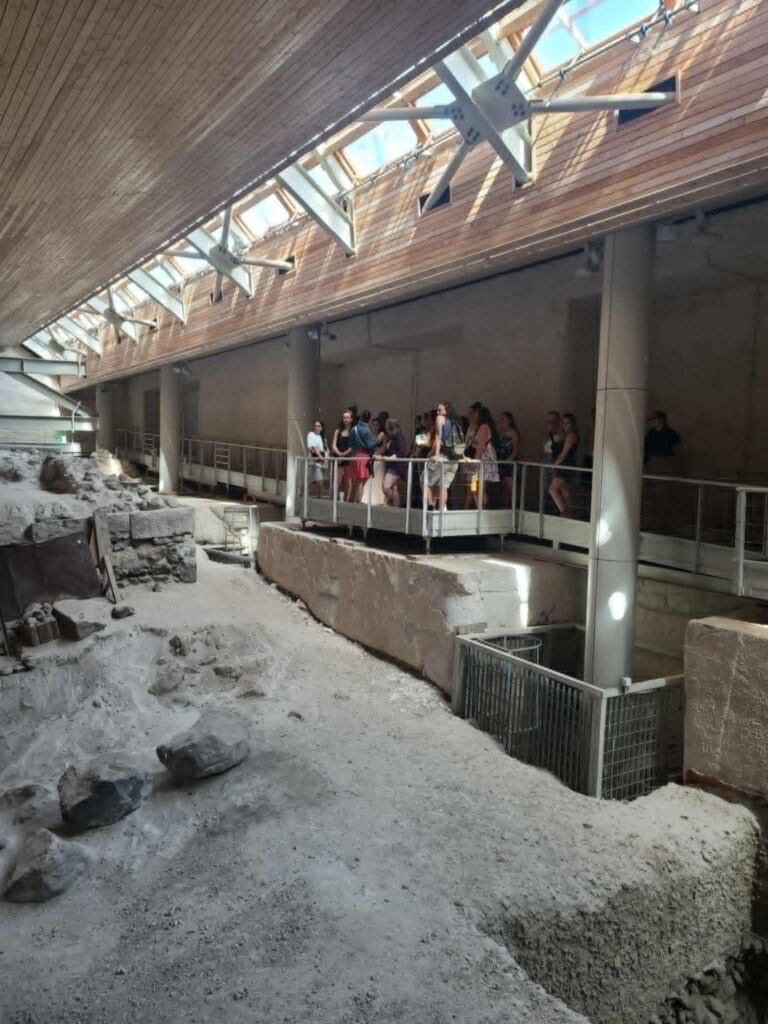
Santorini started with a bang as students headed straight to the city of Oia, wandering through its many picturesque streets and capturing stunning photos of the iconic blue-and-white houses perched on the cliffs. The following day was packed with exploration as we traveled across the island. First stop: the archaeological site of Akrotiri, where students marveled at the volcanic-buried city, its intricate streets, and multi-story buildings.
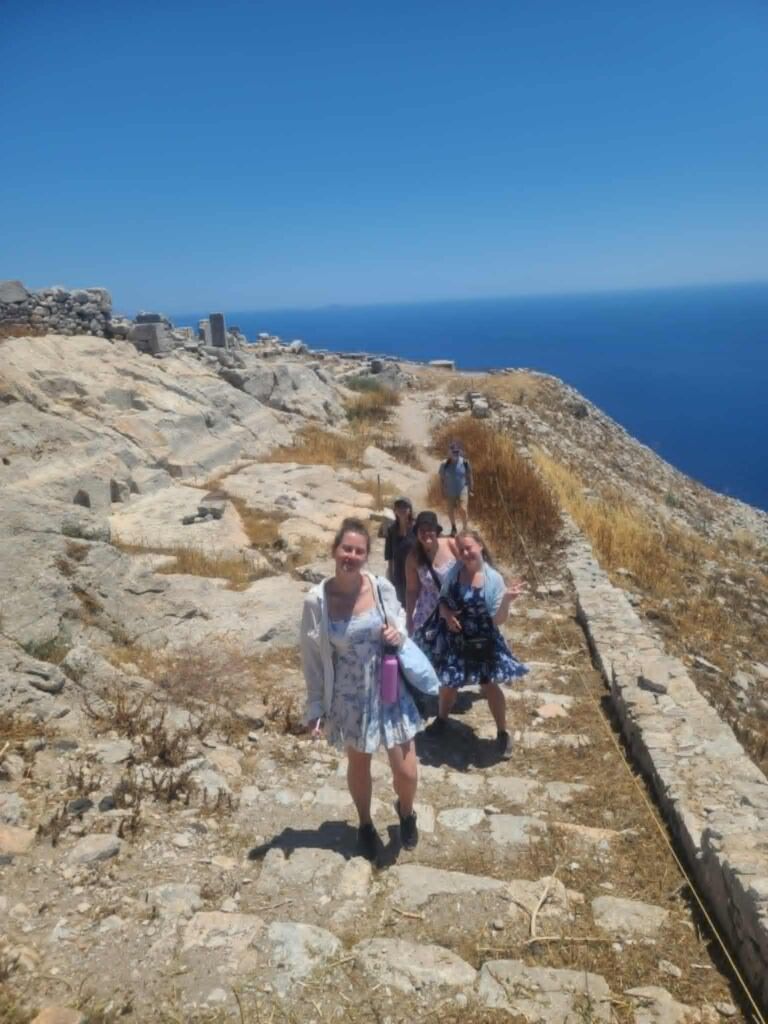
After a quick visit to Pyrgos, the bus dropped them off in Kamari, where some relaxed on the black sand beach while the more adventurous climbed the mountain to visit the Classical and Hellenistic site of Ancient Thera, which overlooks the entire island. Our short Santorini excursion wrapped up with a final morning at the museum of Fira before students descended the cliffside toward the port, preparing for their ferry to Crete!
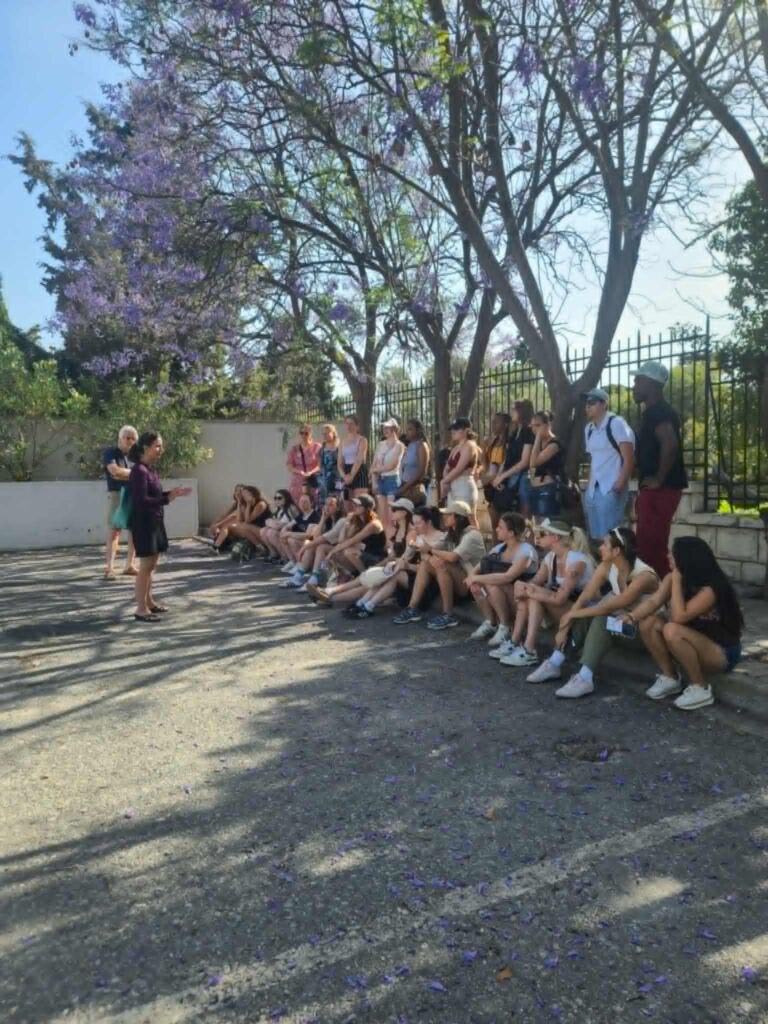
Landing in Crete felt like coming home. Here, students finally escaped the large crowds and stepped into what felt like traditional Greece. The students shook with excitement as they traveled to Knossos, where they encountered the famous reconstructions by Evans and debated the pros and cons of reconstructing archaeological sites. Afterwards, students marveled at the countless artifacts displayed at the Heraklion Museum—many of which they had studied in class but now had the chance to experience in person.

The next day, they ventured south to explore the Palace of Phaistos and took a quick peek at Gortyn to see the famous law code inscribed on the wall behind the Odeon. The Palace of Malia was another fascinating stop, with students roaming its labyrinthine streets, asking questions about conservation efforts and the excavated residential quarters. The highlight of the day, however, was a boat trip to Spinalonga, where students visited the Venetian island that later became infamous as a leper colony in modern history.

After visiting so many sites and museums, a couple of days away from archaeology invigorated them for the western part of the island. On our winding road to Rethymno, we paused to explore the Cave of Svedoni, admiring its stalactites and stalagmites while bats fluttered overhead. Lunch was enjoyed in the charming village of Margarites, where students observed potters crafting their wares—and promptly bought out nearly all their stock! Despite heavy rainfall and Sahara sand blowing in the wind, nothing could stop them from hiking the Imbros Gorge. Ponchos on, they set off from the trailhead, and before long, the rain turned into laughter and singing as they navigated the stunning narrow valley between two mountains.

Our last day in Crete was bittersweet as bags were packed. With a late ferry departure, students took the opportunity to visit the Monastery of Gonia Odigitria, admiring its rich collection of icons, followed by a stop at the charming Museum of Chania. Before heading to the port, they explored the Venetian city, strolling through its historic harbor and, of course, indulging in some gelato!

The ferry ride back to Piraeus was just as emotional. Long after sunset, students gathered at the back of the boat, watching the island fade into the distance. They reminisced about their experiences, laughed at unforgettable moments, discussed unanswered questions from sites and museums, and—naturally—tried their best to mask the sadness of their adventure coming to an end.

I won’t confirm or deny whether tears were shed at the restaurant that last night. But what I can confirm is that the 2025 edition of the CIG’s Cycladic and Crete Summer School was an overwhelming success. Students left Greece with minds brimming with knowledge—and already counting down the days until their return.
Until next year!

The new academic year has begun at the Institute, and we welcome the Institute’s 2025-2026 Neda and Franz Leipen Fellow, Eric Del Fabbro, and Concordia University intern, Aiko Byrne. Eric Del Fabbro is a PhD candidate in the

Over sixty university and CEGEP students from around the globe convened in Asprovalta, Northern Greece, between June 2 and July 14, 2025. Participants engaged in both onsite excavation at Argilos and detailed artifact analysis at the Amphipolis Museum