by Jonathan Tomlinson
Share
Share
Back at it again!
This year, over 80 university and CEGEP students and staff came together for another incredible season at Ancient Argilos in Northern Greece. The 2026 excavation, co-directed by Dr. Zisis Bonias and Dr. Jacques Perreault, was busy, with teams working across our excavation areas. This year, however, we focused on the Koutloudis sector, which contains a series of buildings associated with domestic and commercial activity.
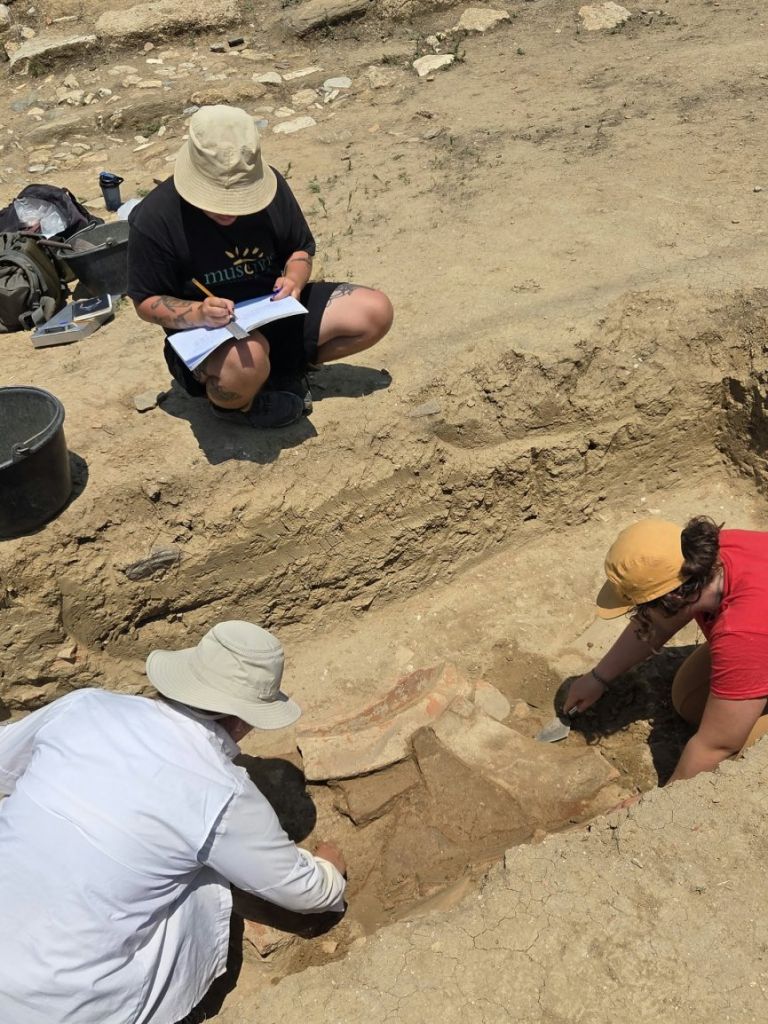
The excavation of a Pithos
In this sector, our teams carefully excavated domestic spaces, ancient storefronts, and various elements of urban infrastructure. Every discovery, from everyday pottery fragments to architectural features, helped us better understand the merchants, craftsmen, and residents who once lived and worked along these streets.
A special thank you goes to Keven Ouellet, Shelby Vieira, Lola Baillet, Samuel Chaput, Ian House, and Justine Buchler, who led our excavation teams throughout the season. Frédéric Lemyre-Corbeil also played an essential role in the field, overseeing our real-time geolocation system and helping us document the excavation with precision as it progressed.
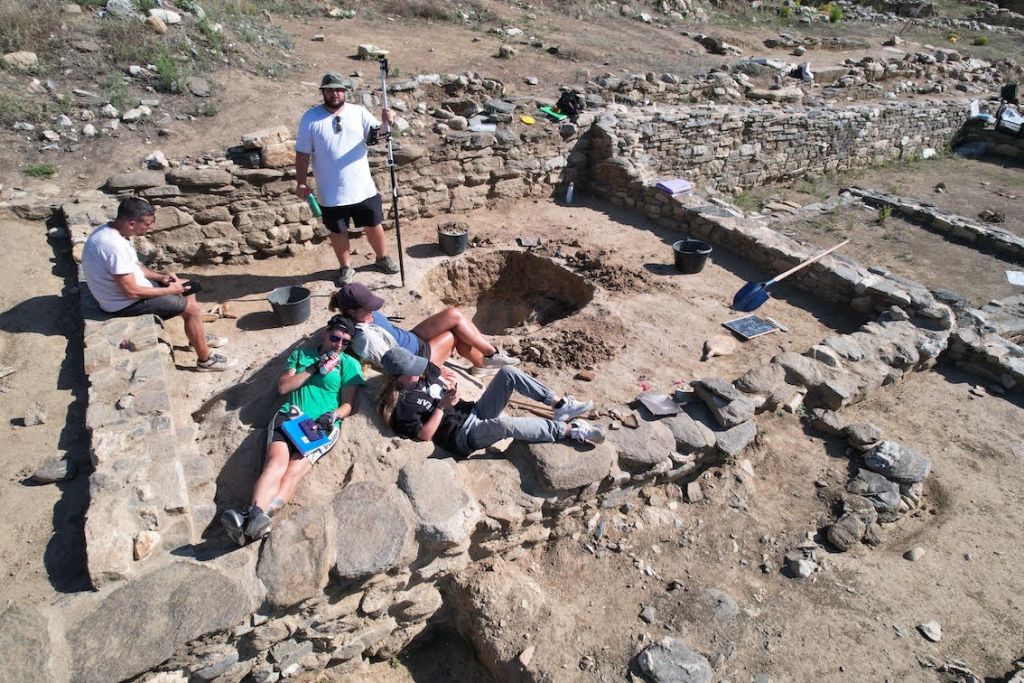
A Well-Deserved Break mid-excavation of a Pithos Fill
This year, we also took a closer look at water management in the ancient city. Alongside investigating its drainage systems, the team continued tracing the aqueduct discovered last year. This work was complemented by a local conference on water management, hosted by the Ephorate and the University of Granada, which brought researchers together to discuss the challenges and importance of water management in ancient communities.
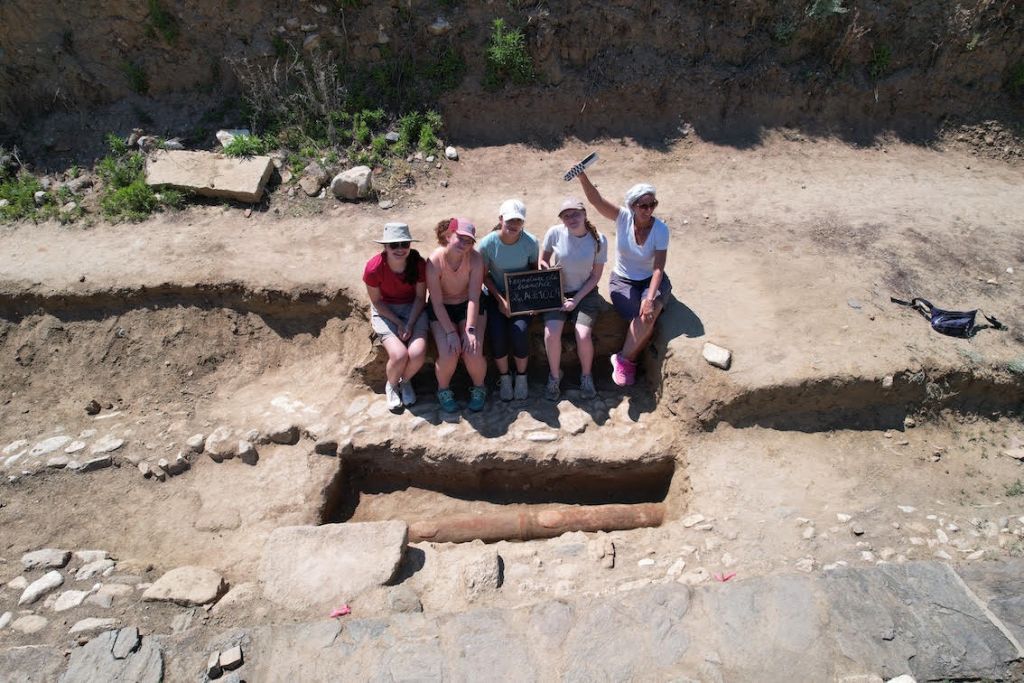
The Successful Discovery of the Aqueduct by the CEGEP Team!
Of course, the work did not stop when we left the trenches. We also spent several days at the museum, where students worked alongside museum staff to wash, catalogue, and stabilize the season’s finds. While perhaps less exciting than uncovering an artifact in the ground, this work is essential to archaeology. It transforms field discoveries into lasting archaeological records and ensures that these artifacts are preserved for future generations of researchers.
A big thank you to Saskia Deluy and Kozeta Mjeshtri, who supervised the museum work and kept everything running smoothly. We would also like to thank the director of the Ephorate, Dimitra Malamidou, head guard Giorgos Galios, and the entire Amphipolis Museum team for their continued warmth, generosity, and support throughout the season.
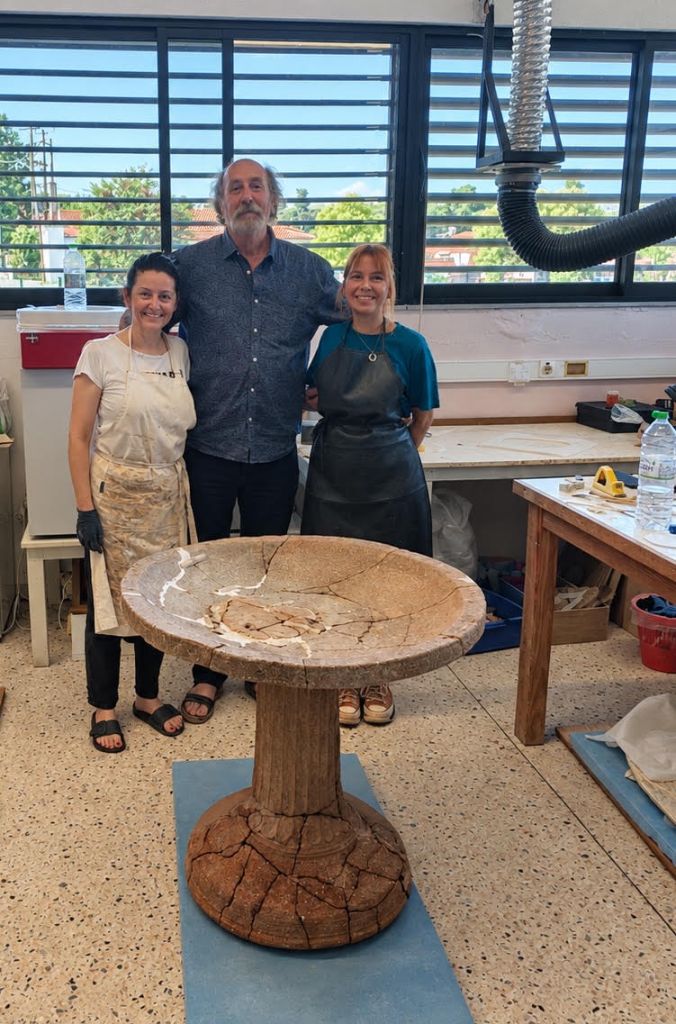
A successful Restoration!
The 2026 season showed us how much we can gain from a more focused approach. By focusing on the commercial sector, we deepened our understanding of everyday life at Argilos, from the activities that took place in its shops and residences to the infrastructure that kept the city running.
A huge thank you to our incredible cohort of university and CEGEP students, as well as to our dedicated staff. Your hard work, enthusiasm, and willingness to get your hands dirty made this 34th season at Argilos one to remember. We are already looking forward to seeing what the next campaigns will reveal!
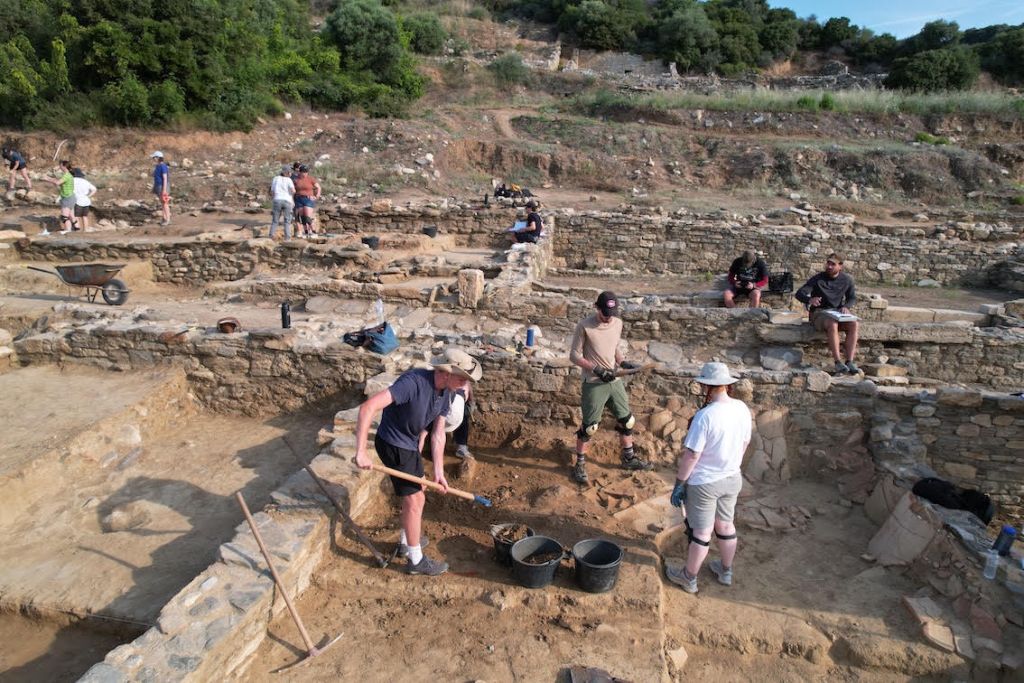
Action on the Koutloudis
The Argilos team
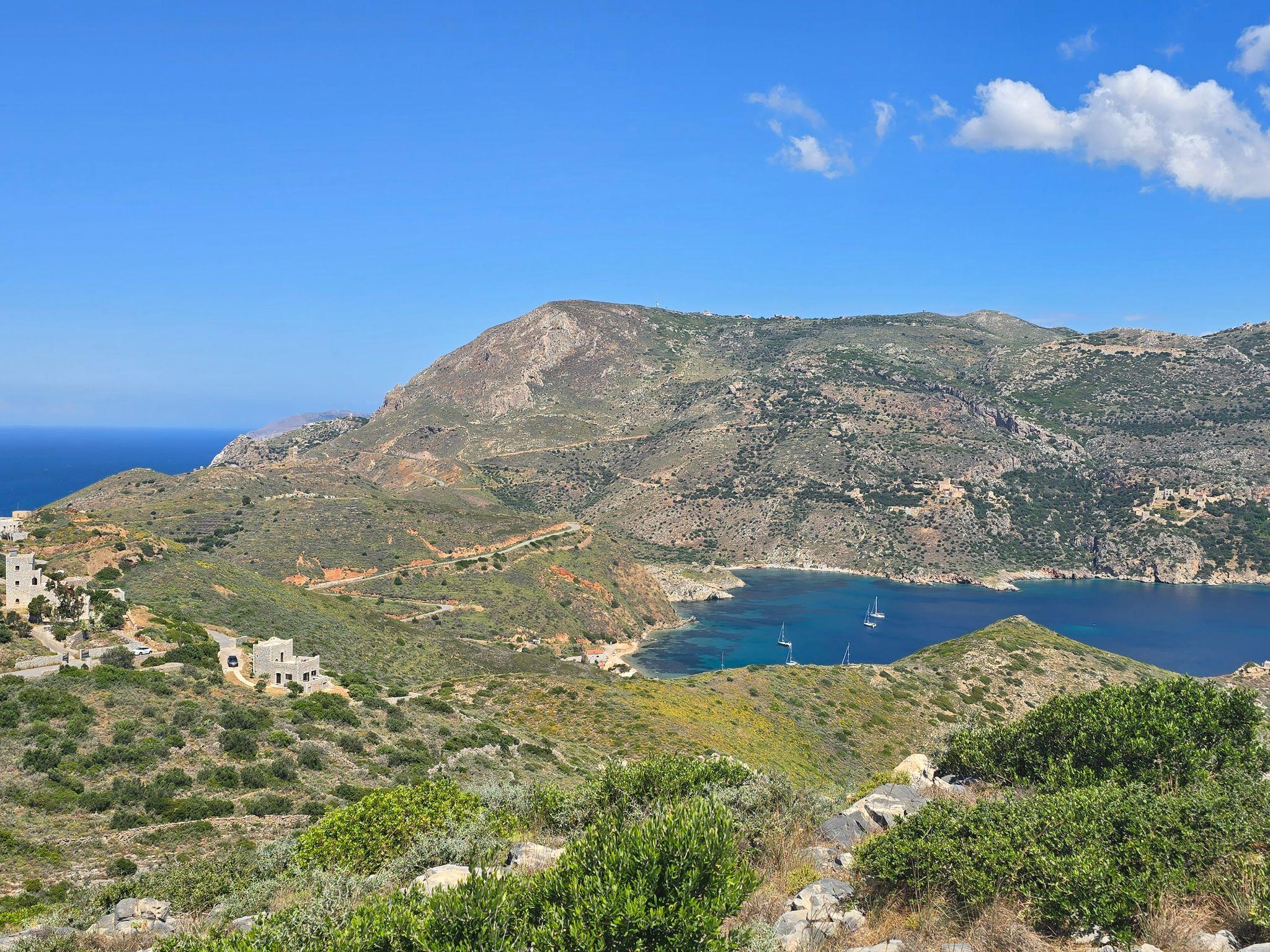
In May-June 2026, under the auspices of the Ephorate of Antiquities of Lakonia, with a permit through the Canadian Institute in Greece, the Southern Mani Archaeological Project (SMAP), directed by Drs. Chelsea Gardner (Acadia University) and William Parkinson
When I got the news that I would be spending my summer in Greece, I was ecstatic. Originally, I impulsively submitted an application to my university’s international program because I had become very engrossed in Greco-Roman classics and
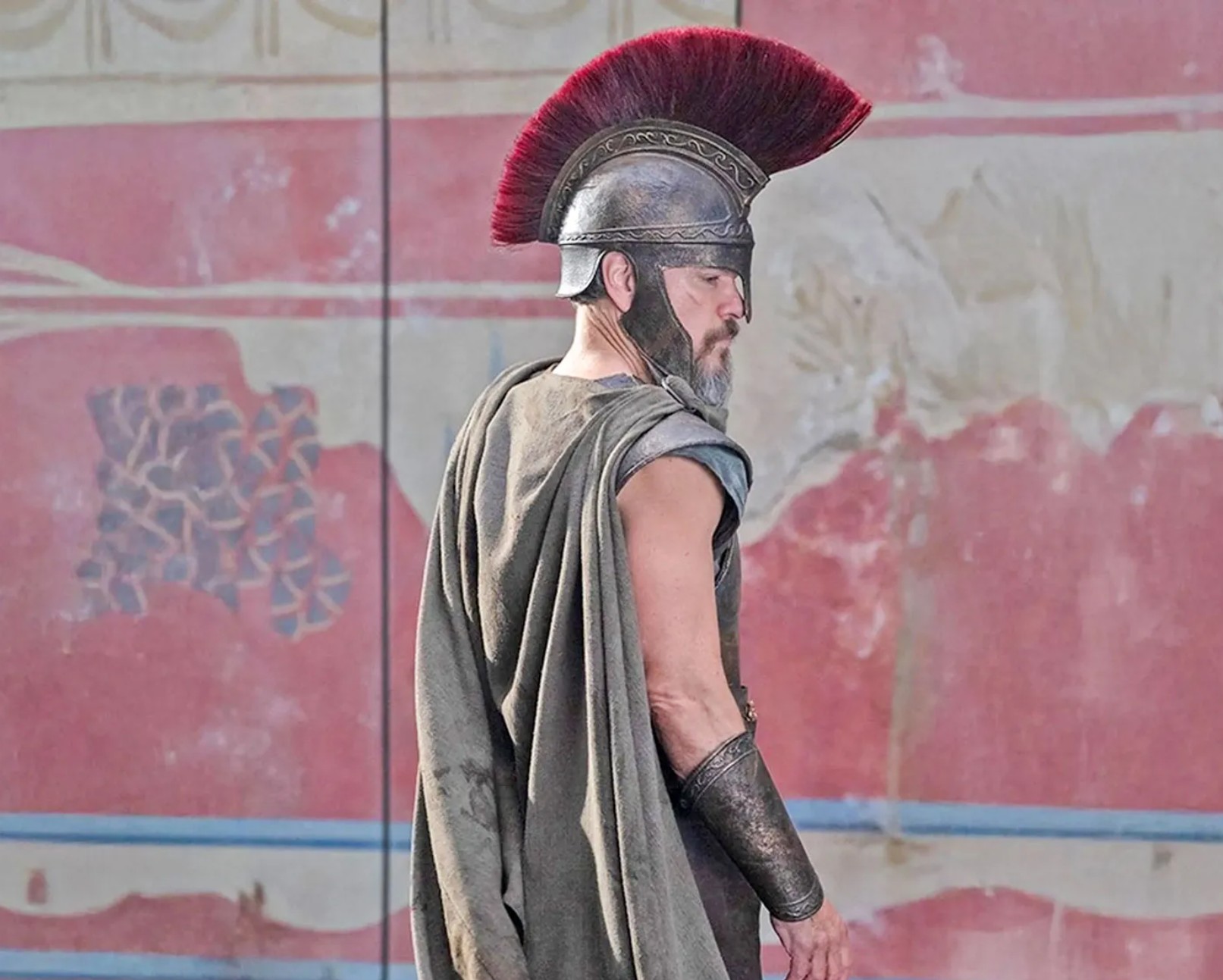
The biggest news from Hollywood this summer has been about the newest blockbuster film from Christopher Nolan, The Odyssey. In addition to its huge success and popularity, discussion focuses on the historical accuracy of various elements of the