Home
Search:
English | Français | Ελληνικά
Home
Untitled 1

Events

There are no upcoming events at this time. Please check back later.

CIG on Facebook

News

Kallithea Kastro excavation 2010

2010.07.12 15:29 Building 10

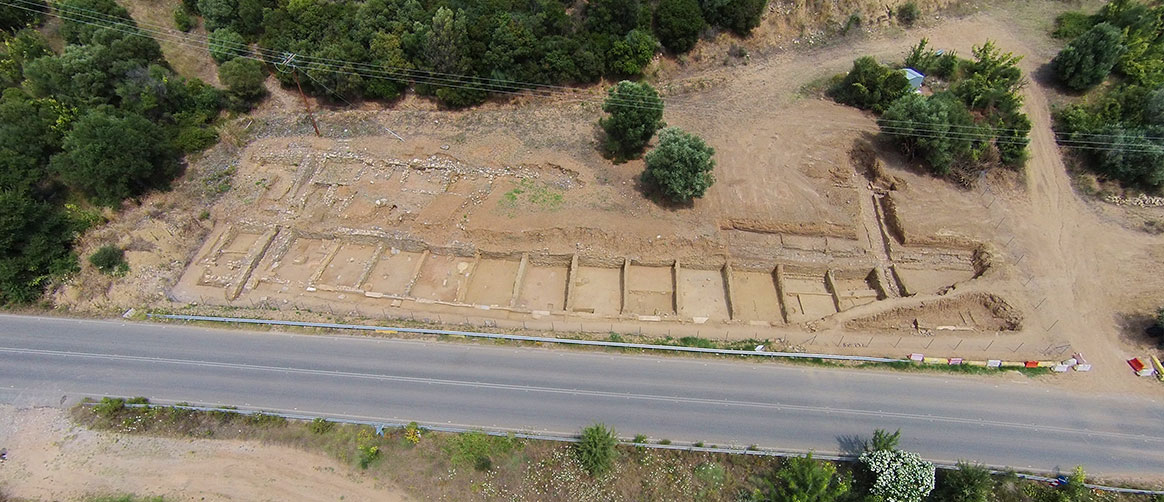
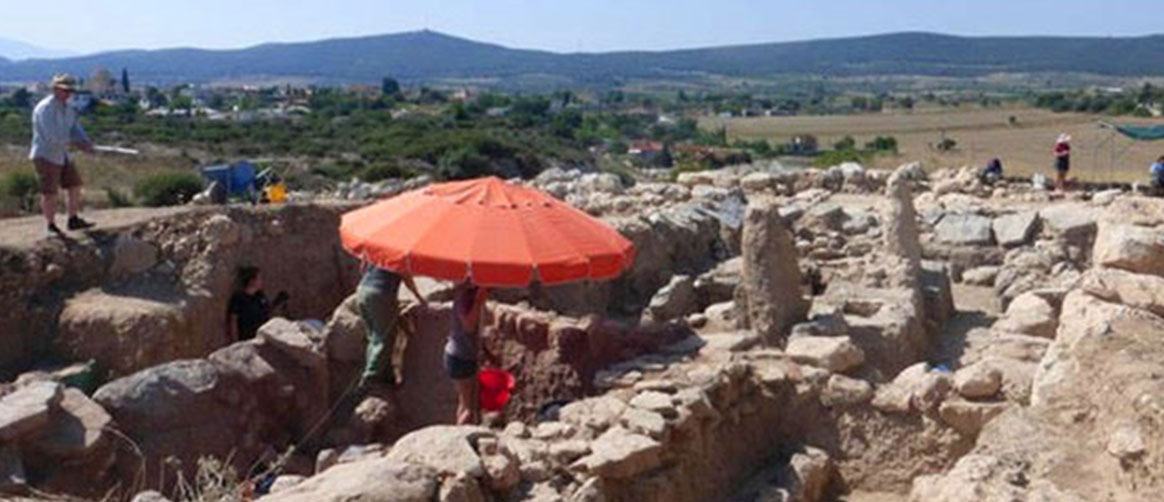
The Institute’s excavation at Kallithea Kastro is a collaboration with the 15th Ephorate of Prehistoric and Classical Antiquities in Larisa. The Canadian team is led by Dr Margriet Haagsma of the University of Alberta. During the 2010 field season – from 30 May to 10 July - the Canadian team continued to excavate Building 10. Located on the eastern slopes of the site, Building 10 is a large structure, with a surface area measuring approximately 20m x 15m. It has a minimum of ten rooms surrounding a central peristyle courtyard. Based on an initial analysis of the architecture, the architectural configuration and data recovered from previous excavations, the building is presumed to have had a domestic function. The excavation method pays particular attention to the location of finds, since the team’s goal is to use the data for a detailed analysis of the spatial distribution of artefacts which may provide information regarding the organisation of domestic activities and the economic base of the household. The finds indicate that the stricture was inhabited during the late 3rd and 2nd centuries BCE.

Column fragment

This season the team continued excavating various rooms to the original floor level. The courtyard, Unit E, is located at the centre of Building 10 and may be of the peristyle type based on the existence of two capitals located in Unit E1 and the large well-worked flat blocks on which the peristyle columns would have rested. On the inside of the peristyle is a basin lined with stones with a drain leading off to a room to the north which can be interpreted as a bathroom since it is lined with water-resistant cement. The artefactual assemblage found in this area, with 15 to 16 unguentaria used as perfume bottles, does indeed suggest that it functioned as a bathroom. However, 40 loomweights were found lying in a row along Wall C; their location in the bathroom, or this room with limited light, suggests that weaving did not occur here, but rather the loomweights were probably stored here on a shelf attached to the wall. Other striking finds this season, such as a large marble base and other fragments of a wash basin, large fragments of painted wall plaster, and high quality mould-made drinking cups, suggest that the original inhabitants must have been relatively wealthy. The large quantity of grinding stones used for grinding cereals found in the house may be relevant to the former inhabitants’ occupation.

EBAP Study Season 2010

The Eastern Boeotia Archaeological Project is a collaboration with the 9th Ephorate of Prehistoric and Classical Antiquities in Thebes The Canadian team is led by Dr Brendan Burke of the University...

Read more

CIG welcomes Levon Golendukhin

CIG is pleased to announce the arrival of new summer intern, Levon Golendukhin, who is due to stay in Athens until early August. Levon is an undergraduate student in his third year in the...

Read more

Open Meeting 2010

The Institute’s annual Open Meeting was attended by around seventy to eighty people in the auditorium of the Danish Institute at Athens in Plaka. Following the Director’s report on the...

Read more